
AAVS News
Support Our Mission
Please support our vital campaigns and outreach programs.
DONATE NOW
Transparency needed to expose animal suffering

Demand Transparency for Animals in Labs!
Millions of animals suffer in laboratories every year, yet the public remains largely in the dark about their numbers, treatment, and fate. In 2025 alone, more than 751,000 animals covered by the Animal Welfare Act (AWA) were used or held in laboratories, according to the US Department of Agriculture. But the shocking truth is that this represents only a fraction of the total number of animals suffering and dying in labs.
It’s time to demand transparency!
The AWA excludes the animals most exploited in experimentation—rats, mice, and birds bred for research, as well as fish. Some peer-reviewed research estimates that rats and mice may comprise over 99 percent of all mammals used in US labs. But because these animals lack AWA coverage, facilities are not required to report their numbers, so there is little public transparency or accountability, and their suffering remains hidden.
We cannot address the full scale of animal suffering in labs without knowing more about how animals are used in experiments.
The bipartisan Federal Animal Research Accountability Act would require labs funded by the National Institutes of Health to report the pain and distress animals endure, along with the numbers of animals used, housed, and bred each year and whether anesthesia and pain relief were given.
This information would give the public a clearer picture of how taxpayer dollars are spent, strengthen accountability, and help researchers identify opportunities to replace animal experiments with more humane, human-relevant methods, saving lives.
Animals need greater protection. Taxpayers deserve transparency. Federally funded research must be accountable to the public. Ask your US representative to support the Federal Animal Research Accountability Act!
Other News
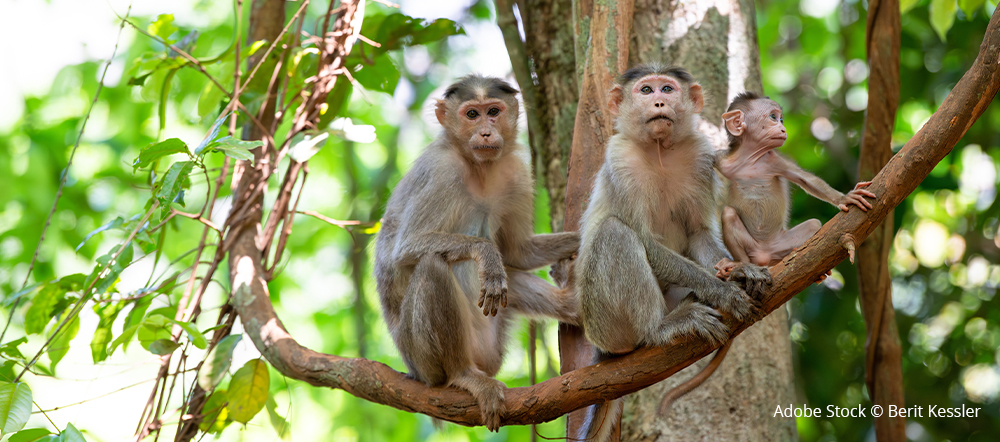
Concern for Wild Macaques in Cambodia
A recent CITES assessment finds that Cambodia has made little progress in reforming its long-tailed macaque export industry, despite warnings about corruption and laundering wild-caught monkeys as captive-bred. Weak oversight, inadequate identification systems, and continued wild captures threaten endangered macaque populations and raise concerns about the international primate trade for biomedical research.
Organ-on-a-Chip Alternatives, Benefits, Challenges
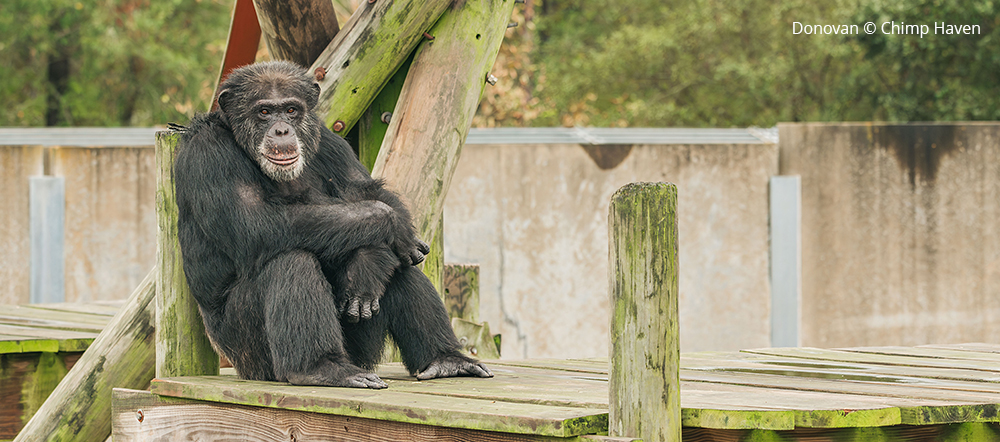
Join AAVS Senior Policy Advisor Eric Kleiman for an online talk hosted by the DePaul Center for Animal Law that explores the striking parallels between the successful campaign to end invasive experimentation on chimps and efforts to retire the CDC monkeys, including many of the same players and baseless claims. Eric was centrally involved in the chimp campaign and will discuss the inspiring story of survivor Donovan as well as current A-V magazine articles. The online event will be broadcast on November 18 from noon to 1 PM (Central Time). Please join us!
Sanctuary Moment
Chimpanzee Sanctuary Northwest
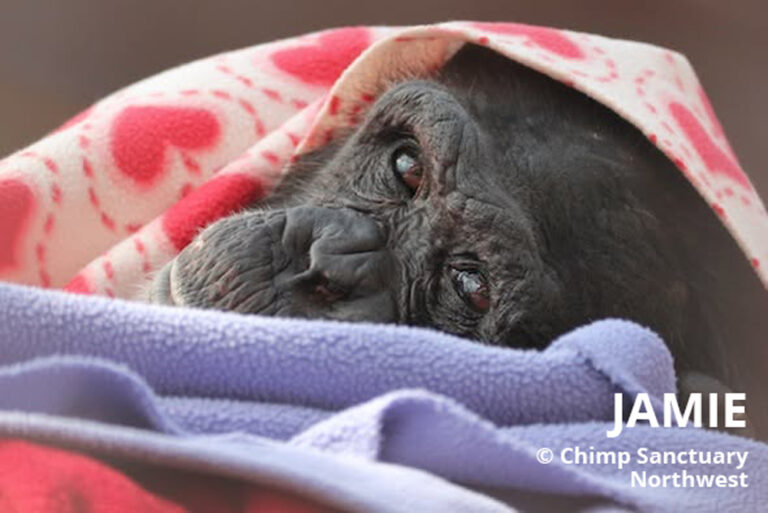
Jamie’s Nests
For Jamie, a chimp at Chimpanzee Sanctuary Northwest (CSNW), building a nest is more than a bedtime ritual. It’s a chance to express her individuality and create a space that feels uniquely hers.
Jamie carefully arranges blankets, sheets, and other treasures to make her nests just right. She may weave blankets through enclosure fencing or tie knots in sheets to keep everything in place. Her favorite nesting spot is often at the base of the playroom stairs, where she can keep an eye on her chimpanzee companions and caregivers. Favorite books and even a cowboy boot may find their way into her cozy creations!
Born in captivity in 1977, Jamie was sold into biomedical research when she was just nine years old. She arrived at CSNW in 2008, where she now enjoys the freedom to make choices and express her unique personality. Each nest is a beautiful reminder that sanctuary means more than safety—it means having the freedom to feel at home.
CSNW is a longtime recipient of AAVS sanctuary grants. Be sure to check out their social media to learn more about Jamie and the other chimpanzees in their care.