AAVS News
February 27, 2026
Primate imports on the rise
More Monkeys for Research, Imports Increase 30%
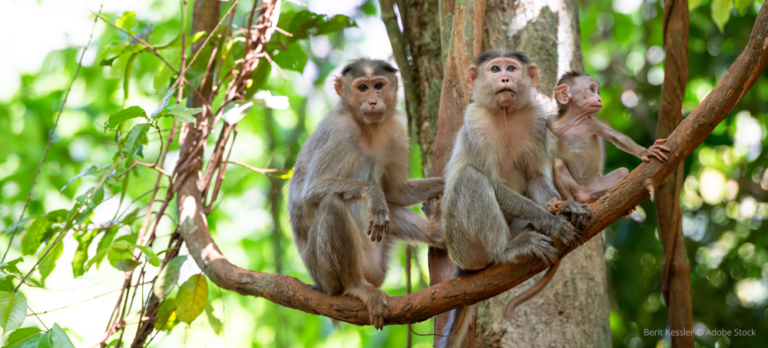
The use of primates in experiments is a hot button issue, and rightly so; primate imports are on the rise. Last year, 22,843 primates were imported into the U.S.—an increase of over 30% from 2024, according to data from the Centers for Disease Control and Prevention. Additionally, over 97% of imported primates were long-tailed macaques, most likely destined for pain and suffering in labs. In fact, they are the most commercially traded primate species in the world.
Long-tailed macaques are also the most commonly used primates in experimentation. They are listed as endangered on the International Union for Conservation of Nature’s Red List, with unsustainable trade practices for research cited as a contributing factor to the species’ population decline. Added concern for the species’ survival was raised following allegations that K.F. (Cambodia) Ltd., which had been a major supplier of long-tailed macaques for research, was involved with illegal wildlife trading.
In January, Charles River Laboratories (CRL)—by far the largest user of primates in the U.S.—announced its $510 million acquisition of K.F., from which it has purchased over 10,000 long-tailed macaques since 2020. As part of the U.S. Department of Justice’s investigation of the supply of nonhuman primates from Cambodia, CRL was subpoenaed in 2023. The company says its purchase of K.F. will help it control the supply of monkeys for research, while animal advocates believe it will likely lead to reduced transparency, more long-tailed macaques being imported into the U.S., and an increased use of primates in experiments.
Monkeys don’t belong in labs. Be sure to check out our “Primates in Crisis” issue of the A-V magazine to learn more about the trade and use of primates in research.
Other News
From Lab to Sanctuary?
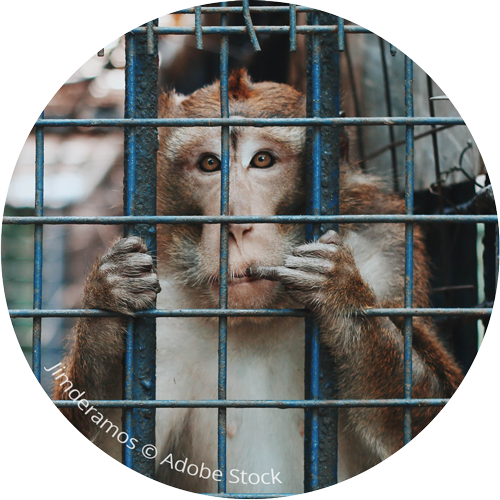
The Oregon National Primate Research Center, located at Oregon Health & Science University (OHSU), may be converted into a sanctuary for the thousands of monkeys it houses. One of the largest primate research labs in the U.S., the Center has long been criticized for its invasive experiments and repeated failures to comply with the minimal standards of the Animal Welfare Act. Animal advocates should continue to push for the lab to close, particularly since the OHSU board voted on February 9 to negotiate with the National Institutes of Health to close the facility.

NH Kid Governor Hopes to Ban Animal Testing
Serving her term as part of a national award-winning civics program for fifth graders created by the Connecticut Democracy Center, New Hampshire’s 2025 Kid Governor®, Jade Adams, used her platform to challenge the suffering of animals in laboratories. She spent her term raising awareness, visiting schools, and organizing advocacy efforts across the state, as well as pushing lawmakers to limit animal testing for cosmetics. And now a bipartisan bill has been introduced to the New Hampshire state legislature that would restrict animal testing where alternatives exist. We’re so inspired by her advocacy!
Sanctuary Moment
Chimp Haven
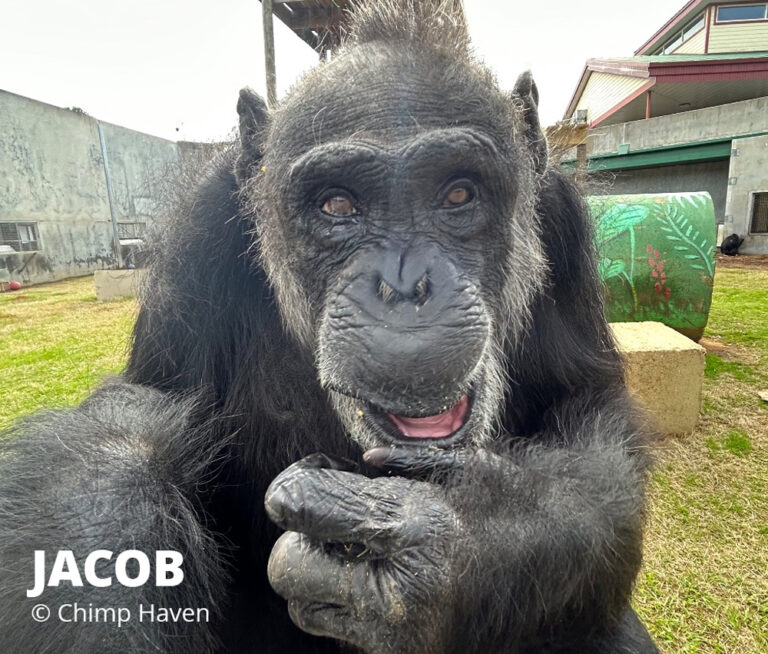
AAVS joins Chimp Haven in celebrating Jacob, a beloved chimpanzee who has turned 66 years old and has been living his best life for 20 years at the sanctuary. One of the oldest male chimpanzees in the United States, Jacob gets extra love from sanctuary staff for his sweet, easygoing personality.
He likes snacks and social time with his chimp friends more than interacting with humans, and especially enjoys relaxing in hammocks; eating greens, bananas, peanut butter, and frozen treats; and making raspberry noises to get his caregivers’ attention. Jacob also likes to watch his chimp neighbors.
Despite his advancing age and some hearing loss, Jacob embraces life at Chimp Haven, a longtime recipient of AAVS sanctuary grants. He uses newly installed stairs to navigate structures more comfortably and continues to participate in daily sanctuary routines. Learn more about Jacob by following Chimp Haven’s blog.