AAVS News
May 28, 2026
Use your voice to protect animals in labs
Demand Transparency for Animals in Laboratories
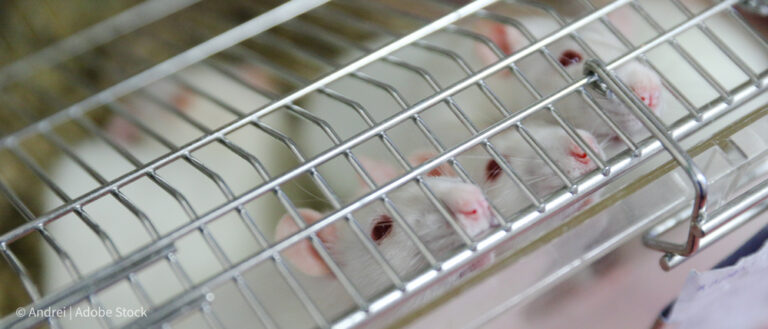
Every year, millions of animals suffer behind closed laboratory doors while the public remains largely in the dark. According to the US Department of Agriculture, more than 775,000 animals covered by the Animal Welfare Act (AWA) were used in laboratories in fiscal year 2024. But shockingly, this is only a tiny percentage of the total number of animals used in experiments.
The AWA covers dogs, cats, primates, rabbits, and other warm-blooded species, but it excludes the animals most used in labs—rats, mice, fish, and birds bred for research. In a 2021 Scientific Reports article, laboratory animal veterinarian Larry Carbone estimated that rats and mice comprise over 99 percent of animals used in US research institutions. For animals not covered by the AWA, these numbers are not required to be publicly reported, so there is little transparency about their suffering.
This important legislation would require facilities that receive funding from the National Institutes of Health (the largest funder of biomedical research in the world) to publicly report the following:
- the number of animals used, housed, and bred each year
- animal pain and distress levels
- anesthesia and pain relief administered
The information would be available in a public database, offering long-overdue transparency in US biomedical research. This would empower the public to fully understand the cruelty of the animal experimentations funded with billions of taxpayer dollars annually. Better reporting will help ensure that researchers consider alternatives to painful animal experiments—and finally show taxpayers how animals are being used in federally funded research.
Please contact your representative today and urge them to support the Federal Animal Research Accountability Act!
Other News
Cephalopod Welfare Standards
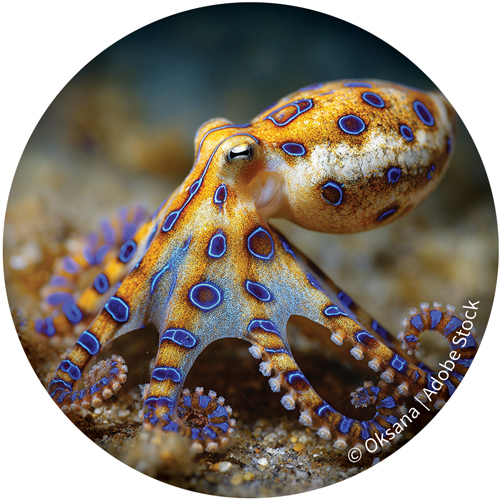
Octopuses and other cephalopods have been shown to possess advanced cognition and experience pain, but protections for these animals still vary internationally. Nature’s editorial, “Cephalopods Deserve Higher Welfare Standards in Research,” supports the proposed UN Convention on Animal Health and Protection, which would extend protections to all nonhuman animals. The editorial calls for stronger international welfare standards, improved laboratory oversight, and ethical reforms to better care for these highly intelligent creatures.
Organ-on-a-Chip Alternatives, Benefits, Challenges
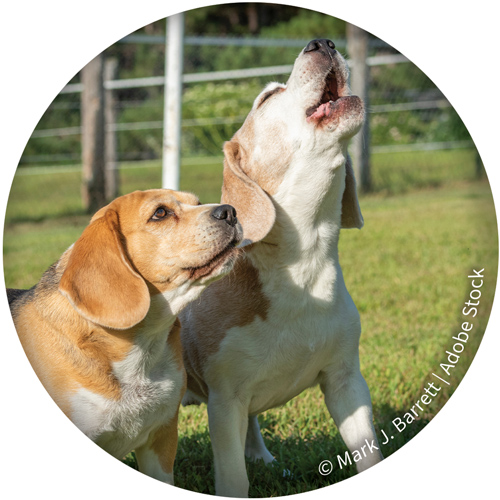
Controversial Wisconsin breeding facility Ridglan Farms has released the final group of the 1,500 beagles it agreed to sell to animal welfare groups in April. The company entered this agreement shortly before it was scheduled to surrender its breeding license to avoid criminal cruelty charges. Bred for use in research, the dogs suffered under veterinary care so deficient the lead veterinarian’s license was suspended. The dogs have since been transferred to shelters and rescue groups for medical care and adoption.
Sanctuary Moment
Global Federation of Animal Sanctuaries
The Best Care Possible
An important part of AAVS’s mission to end the use of animals in science is supporting sanctuaries caring for animals released from research labs. True sanctuaries provide an opportunity for animals to heal from suffering and thrive in nurturing environments that foster their natural behaviors. Unfortunately, some captive animal facilities misrepresent themselves as sanctuaries, relying on this misconception to buy and sell animals and collect financial support. These pseudosanctuaries exploit the animals they are supposed to be saving while preying on the unwitting public.
That’s why AAVS supports the Global Federation of Animal Sanctuaries (GFAS). Widely considered the gold standard for evaluating rescues and sanctuaries, GFAS distinguishes true sanctuaries from other facilities through its accreditation program. Its animal care standards exceed those required by the Animal Welfare Act and include best practice operations. A true sanctuary provides animals with a home where they can express their species-specific behaviors and make their own choices without fear of exploitation.
Want to learn more? GFAS is very active on social media and shares photos, videos, and interesting information from all types of accredited sanctuaries. Be sure to check them out!