AAVS News
September 30, 2026
Exciting progress to replace animal experiments in federal research
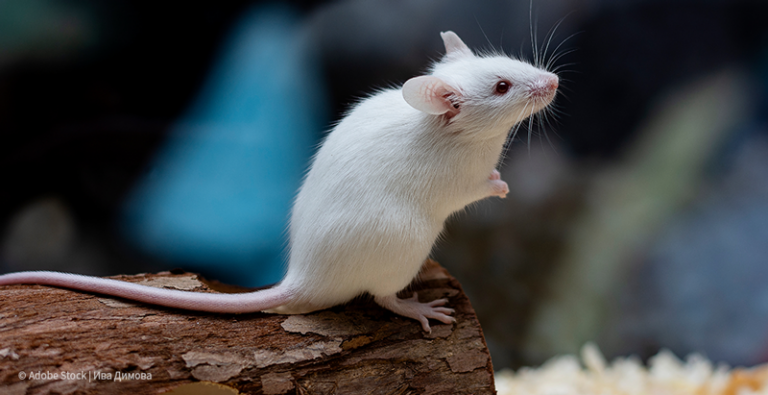
Federal Agencies Move to Replace Animal Experiments
This month, the Food and Drug Administration (FDA) updated its regulations to recognize non-animal methods—including human cells, organs-on-chips, computer models, and other New Approach Methodologies (NAMs)—as options for evaluating the safety of drugs and biological products. The change follows years of advocacy by Humane World for Animals, joined by AAVS and other animal protection organizations, to remove regulatory barriers to modern, human-relevant science. The FDA also launched a database highlighting real-world applications of NAMs, signaling growing acceptance of non-animal approaches in drug development.
The National Institutes of Health (NIH) is similarly investing in human-based research. Its new initiatives include more than $88 million for human-based research infrastructure, a $7 million-plus challenge focused on advanced NAM technologies, and a new NIH Clinical Center laboratory that will combine human organoids, robotics, artificial intelligence, and advanced data systems to study human biology. NIH says these efforts “will accelerate scientific discovery” while at the same time “reduce reliance on animals.”
The NIH is also seeking public input on a proposal to require annual reporting of vertebrate animals used in NIH-funded research, including the most used animals in research—mice, rats, and fish—who are not covered by the Animal Welfare Act. Animal advocates, particularly the Physicians Committee for Responsible Medicine, have long pushed for this change, which would bring much-needed transparency to the use of millions of animals currently missing from federal reporting.
Meanwhile, the EPA announced new approaches for chemical and pesticide safety testing, including 3D human airway tissue and computational methods, that can eliminate certain animal tests. The agency is working to end required testing on mammals by 2035.
Together, these developments represent important progress toward a future where scientific discovery no longer depends on causing suffering to animals—and where better, human-relevant science can lead the way.
Other News
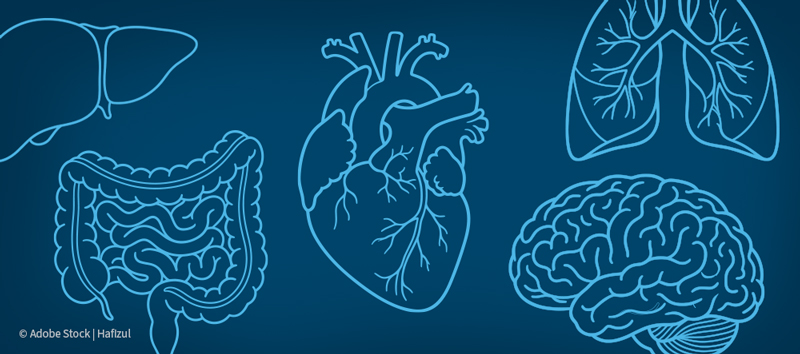
Alternatives Create Seismic Shift in Drug Development
A “seismic shift” away from animal tests to human-based research could reduce the reliance on animals in biomedical science, states an August 21 JAMA Medical News article. The publication highlights how patient-derived organoids—miniature models of human tissues—are already helping scientists identify promising drugs. Last year, the NIH launched the Standardized Organoid Modeling Center with $87 million in contracts. These advances demonstrate the potential of more human-relevant methods to replace animals while improving drug development and patient care and reducing animal suffering.

Oklahoma Legislature Pound Seizure Study
Oklahoma is the only state with a mandatory pound-seizure law, meaning that shelters must surrender unclaimed dogs and cats for research if requested by a lab. State lawmakers conducted a study examining whether this law should be repealed, and there is hope this will happen during the next legislative session in February. Any policy that allows animals to be taken from shelters for experimentation risks undermining public trust, compromising animal welfare, and treating vulnerable animals as research commodities.
Sanctuary Moment
Oklahoma Primate Sanctuary
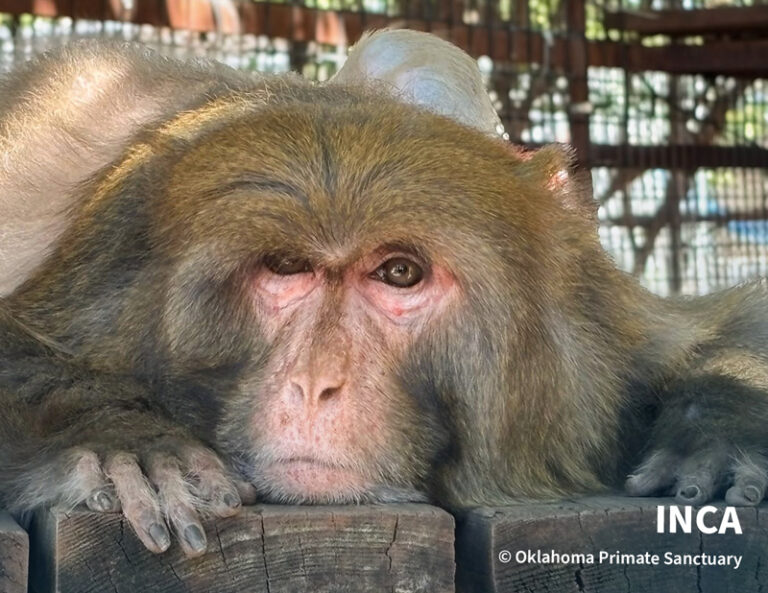
If you have a cat or dog at home who is a master at avoiding taking medication, you might be surprised to know that you have something in common with the caregivers at the Oklahoma Primate Sanctuary (OPS). Released from a lab 13 years ago, Inca is a pretty laid-back macaque, except when it’s time to take his arthritis medication. It doesn’t matter how clever his caregivers are in trying to hide his meds—Inca knows, and it can take several attempts before he finally gives in and takes them. Thankfully, his dedicated caregivers are patient, creative, and more than willing to play the classic “hide the pill in a tasty treat” game to make sure this special guy gets exactly what he needs.
OPS is a long-time recipient of AAVS sanctuary grants and does a great job sharing the lives and personalities of the primates who live there. Be sure to check them out!